
 We are coming to the end of Adar, and next Sunday, 30th March, will be the first day of Nissan, the spring month of Pesach. For Muslims, the end of Adar this year will be the end of their Ramadan, their month of fasting during daylight hours. They will celebrate with special prayers and a great feast, Idh ul-Fitr. But our special prayers and great feast – Pesach – will fall two weeks later, as always, at the full moon in the middle of Nissan.
If you listen to The Archers, you will know that Linda Snell has been supporting her Ambridge neighbours, the Maliks, by fasting during Ramadan. Our own member, Judith Konzon, is every bit as determined and combative as Linda Snell. She phoned into Radio 4, and her mischievous suggestion was broadcast to the nation – “If Linda Snell now fasts over Ramadan, surely the whole of Ambridge will be joining their Jewish friends and neighbours and will be fasting next Yom Kippur.”
Jews, Muslims, and Hindus all follow the regular cycle of the moon in religious celebrations and fasts. The joyous and anarchic Hindu festival of Holi, involving throwing powder paint over one another, coincides with Purim. Christians have generally abandoned the lunar calendar, except for Easter, where they do follow the moon so that Easter generally coincides with Pesach. However, this year, the first day of Pesach falls exactly a week before Easter Sunday.
Jewish and Muslim months all start with the New Moon, Rosh Chodesh, when the moon is actually invisible because it is too close to the glare of the sun. Last year, Fiona and I went to Maine to watch a total eclipse of the sun on Rosh Chodesh Nissan – when the moon actually passed directly in front of the sun to obscure its light and cast the whole world into utter darkness at noon. This Rosh Chodesh Nissan, the morning of Shabbat, 29th March, there will be a partial eclipse of the sun, between 10 am and noon. If it’s not cloudy, it should be possible to see the black lunar disc steadily eating away at a corner of the face of the sun.
Of course, you mustn’t ever look directly at the sun, but you will be able to see and enjoy this unusual phenomenon using a pinhole camera or by projecting an image of the sun through binoculars onto a piece of white card.
So next Shabbat, come to our synagogue service or to Cheder to welcome in Nissan and to look forward to celebrating Pesach in a fortnight’s time. If we’re lucky and the sun is shining, you and your children will be able to witness this partial solar eclipse.
Our rabbis decreed a blessing must be said whenever we witness an unusual astronomical phenomenon – (page 546 in our Siddur):
"We praise you, Eternal God, sovereign of the whole universe, for the marvels of Your creation."
-
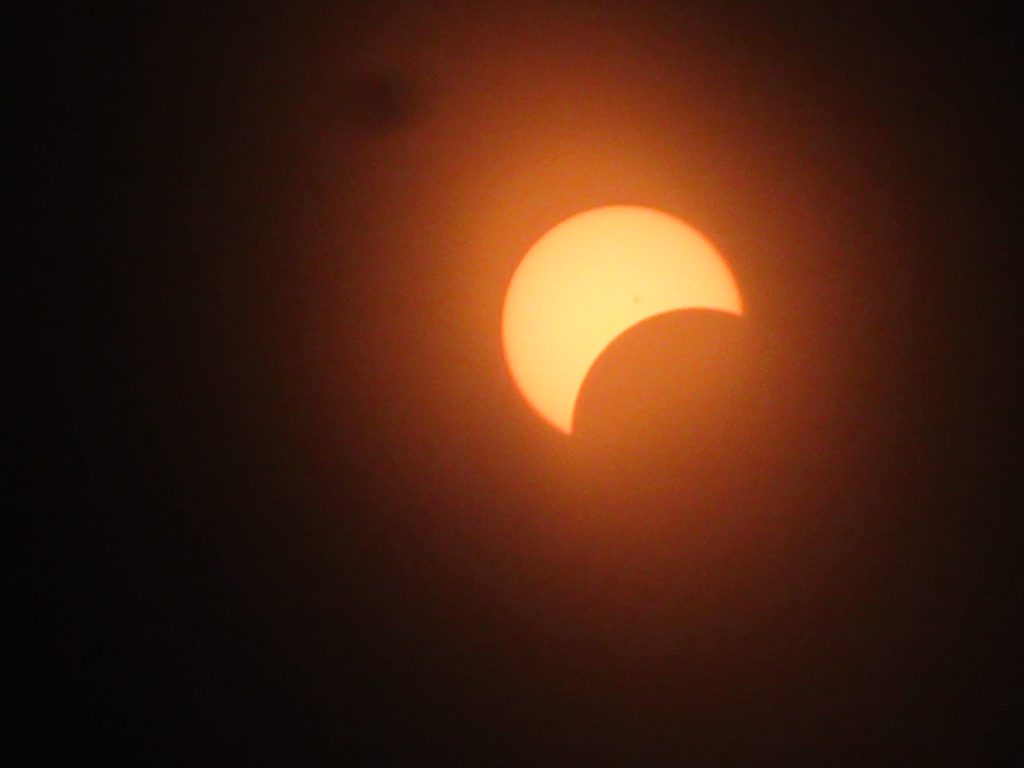
- Maine Eclipse
-
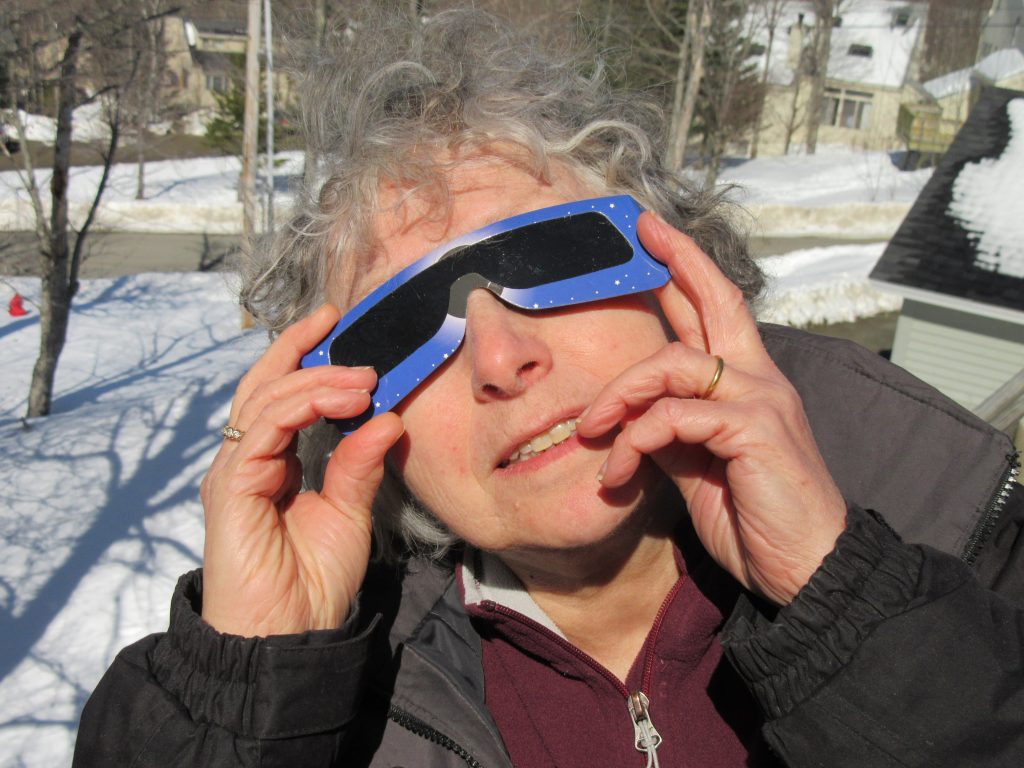
- Mrs Fiona Hulbert
0 Comments